
 Cart is empty
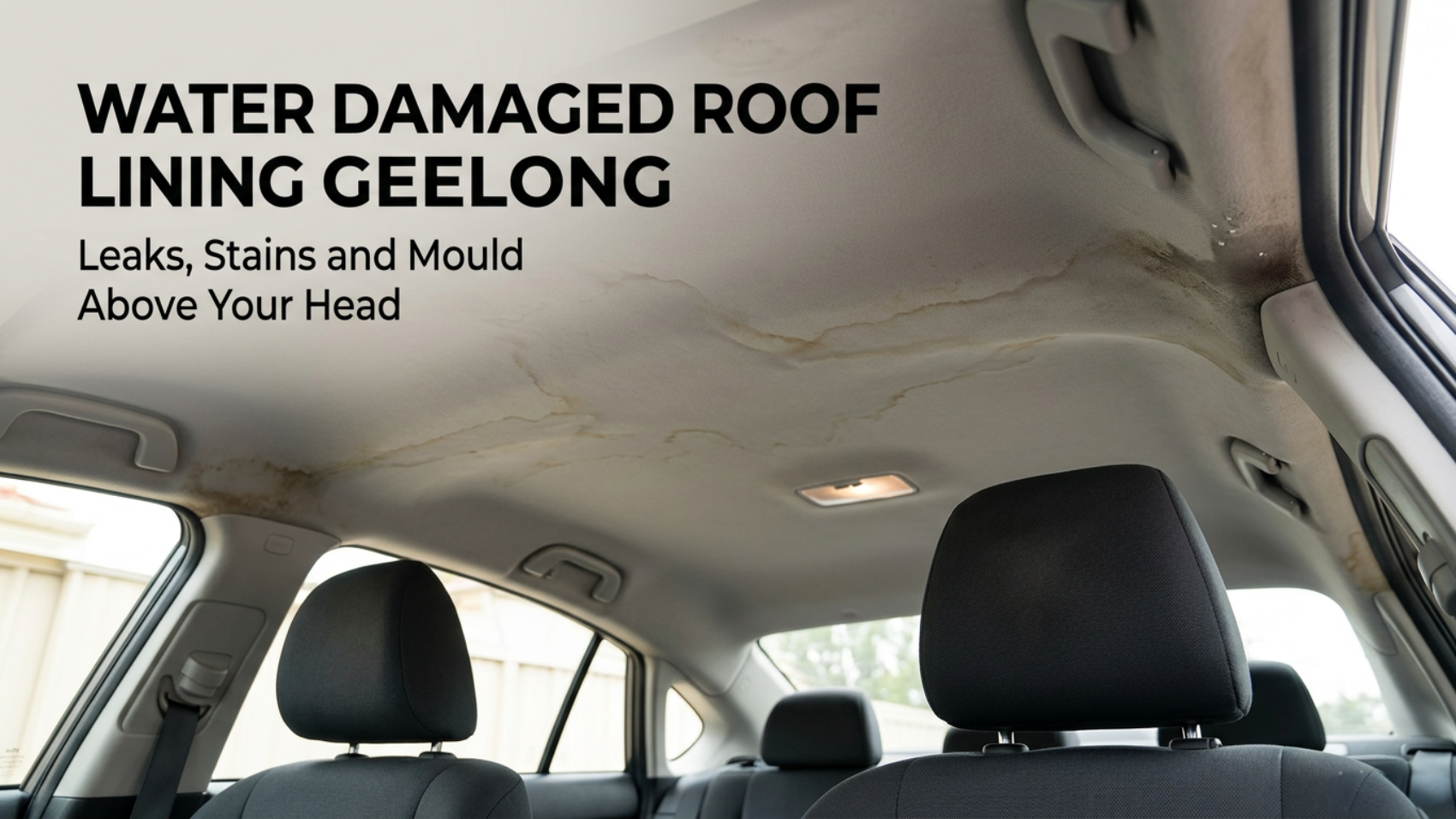
A water damaged roof lining Geelong drivers discover after heavy rain looks different to ordinary sagging. Instead of even ripples, you get a brown ring, a dark patch, or fabric that has dropped in one specific corner.
That distinction matters, because a leak has to be found and sealed before any re-covering is worth doing. Otherwise the new fabric simply stains in the same spot.
How to Tell Water Damage From Normal Sagging
Heat-related sagging spreads gradually and evenly, usually starting in the middle of the board. Water damage behaves differently.
- Tide marks — brown or yellow rings with a defined edge
- Localised drooping — one corner hanging while the rest stays tight
- A musty smell that gets stronger after rain rather than after hot weather
- Damp carpet beneath the affected area, or wet pillar trim
- Dark patches that darken further overnight and lighten during the day
If you see any of those, treat it as a leak first and a trim job second.
Where the Water Usually Gets In
Roof water rarely comes through the roof panel itself. Instead it finds a path around something fitted into it.
- Sunroof drains — blocked by leaves and grit, so the tray overflows into the cabin
- Aerial and roof rack mounts — perished sealing washers under the base
- Windscreen and rear glass seals — aged urethane letting water track along the header
- Door and pillar seals — hardened rubber that no longer sits flat
- Third brake light housings on hatchbacks and wagons
Sunroof drains are far and away the most common cause. They are also the easiest to overlook, since the water appears at the pillar rather than at the roof opening. Our guide to sunroof car roof lining repair covers that arrangement.
Why Mould Grows in a Wet Headliner
The foam behind headliner fabric is porous, so it holds moisture like a sponge and dries very slowly.
A closed car sitting in the sun then creates warm, humid, still air directly against that damp layer. Consequently mould establishes quickly, and the smell returns every time the cabin warms up. Cleaning the fabric surface achieves little, because the growth sits in the foam underneath.
Geelong’s coastal humidity makes this worse than it would be inland, particularly for cars parked near the bay or on the Bellarine.
Fixing a Water Damaged Roof Lining Properly
The sequence matters more than the materials here.
First we trace and confirm the leak, then the board comes out. Next the substrate is dried completely and checked for warping, since a soaked board can swell and lose its shape. Only after that does new foam-backed fabric go on, bonded with high-temperature adhesive.
Skipping the drying stage is the classic mistake. Fresh fabric over a damp board traps the moisture, and the stain reappears within weeks.
Frequently Asked Questions
Can a water stain be cleaned out instead?
Rarely. Tide marks sit in the fibres and the foam behind them, so cleaning usually spreads the ring rather than removing it.
Will insurance cover it?
Sometimes, if the water entered through storm damage rather than gradual seal wear. Your insurer will want the cause identified, which is another reason to trace the leak first.
Is a damp headliner a health concern?
Mould in an enclosed cabin is worth taking seriously, especially for anyone with asthma or allergies. Removing the affected foam deals with the source.
Do you check for leaks before quoting?
Yes. There is no point re-covering a board while water is still getting in, so we identify the entry point as part of the assessment.
Book an Assessment in Geelong
Water damage does not improve on its own, and a wet board eventually warps beyond repair.
Johnson Car Ceiling Solutions handles water damaged roof lining Geelong repairs across the city, the Bellarine and the Surf Coast, from leak diagnosis through to a fresh automotive-grade fabric finish.
Contact Us and we will tell you what is actually going on above your head.